
Stick Warriors Shadow Fight
LeeNgoocArcade
4.9133.00 Reviews
- Version
- 4.6
- Installs
- 5.00M
- Age Rating
- Everyone 10+
Screenshots
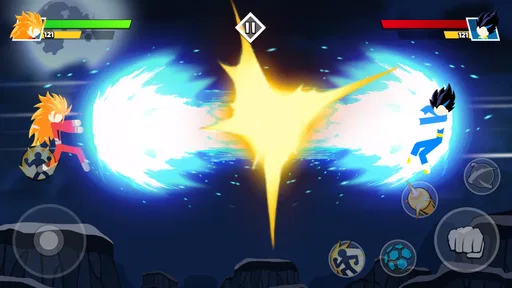
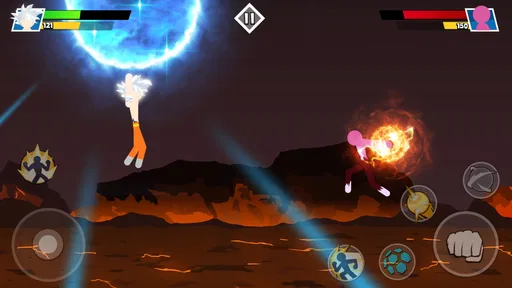
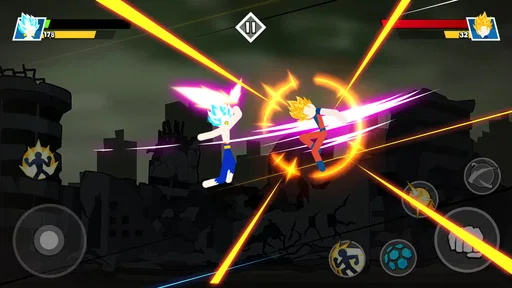
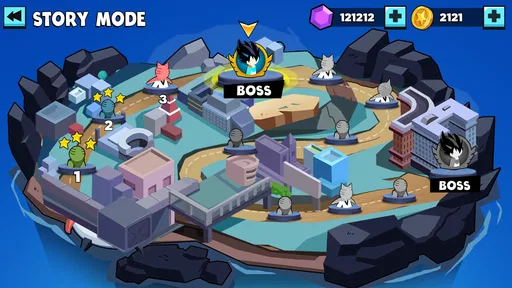
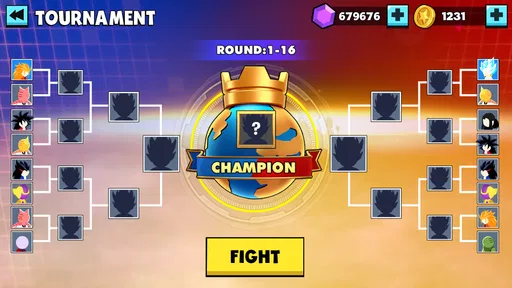
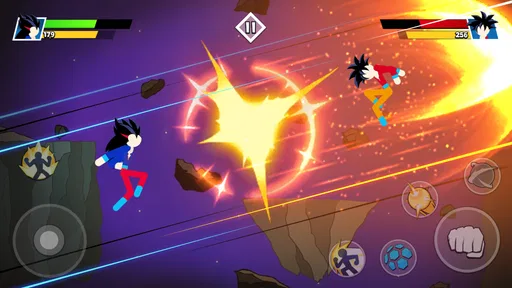


Our Review of Stick Warriors Shadow Fight
 Analysis by Appyee
Some stickman games are easy to understand but difficult to enjoy for more than a few minutes. Stick Warriors Shadow Fight sits in an interesting middle ground: it is an arcade game with a role-playing flavor, built around the appeal of simple stick-figure combat rather than a large, complicated world. I found it most enjoyable when I treated it as a quick-action game for short sessions, not as a deep console-style role-playing adventure.
The basic attraction is clear. The visual style is stripped down, the characters are easy to read, and the action aims to get you into a fight without a long learning period. That makes it a natural choice when I want something more active than a puzzle but less demanding than a large adventure game. It is free to start, although optional purchases range from a small amount to considerably more per item, so I would approach the purchase screen carefully rather than assuming every useful improvement is included at no cost.
What playing it feels like in everyday use
My first useful observation is that this is better suited to compact bursts than to a long, uninterrupted evening. A typical situation would be waiting for an appointment, taking a break from work, or sitting somewhere with only a few minutes to spare. The stickman presentation makes the game immediately approachable, while the arcade category signals the kind of experience to expect: quick reactions, repeated attempts, and a focus on the next encounter rather than a huge amount of reading.
The role-playing angle gives the fights a little more purpose than a completely disposable arcade challenge. Still, I would not install it expecting the character depth, storytelling, or strategic variety of a large role-playing game. That distinction matters. If you want a compact combat game with a familiar shadow-fighter atmosphere, it can be a good fit. If you want a long narrative campaign with carefully developed characters, a different type of game will serve you better.
One practical strength is readability. Stick figures usually leave less visual clutter than detailed character models, and that can help when several movements happen close together. The trade-off is that the presentation may feel plain to players who choose games for rich environments, elaborate animation, or a strong cinematic identity. I personally liked the directness, but I can also see why someone accustomed to polished three-dimensional fighters might find it lightweight.
Where new players are most likely to get stuck
The first point of friction is expectation. The short store wording presents the game as a meeting point between role-playing and stickman games, but those labels can mean very different things to different players. I would read them here as a promise of accessible combat with some progression-oriented appeal, not as a guarantee of a complex character-building system. Going in with that expectation makes the early experience easier to judge fairly.
A second issue is the natural repetition of arcade play. When a fight does not go well, the instinct is often to repeat it immediately. That can work, but mindless retries are not always the best approach. I found it more useful to pause mentally after a failed attempt and identify whether the problem was timing, positioning, or simply rushing. Even in a simple stickman game, a small change in rhythm can be more valuable than pressing through the same mistake again.
Players can also get stuck because they treat every available improvement as urgent. I recommend learning the basic feel of the combat before spending anything. This is especially important because the game includes in-app purchases, and the listed range reaches from $1.99 to $99.99 for an item. The safest habit is to decide in advance whether you are playing entirely for free and ignore purchase prompts, or whether you have a firm spending limit.
The most useful early rule is simple: learn the fight before trying to optimize it. That approach prevents the common mistake of confusing a difficult encounter with a need to buy something. It also gives you a clearer idea of whether the core action is enjoyable enough to justify continued play.
Setup checks before blaming the game
On Android, the game supports version 8.0 and newer. Before installing, I would check the operating system first, especially on an older phone or a device that has not received recent updates. A compatibility problem can look like a game problem when the real issue is simply that the device is below the supported system requirement.
I would also begin with the ordinary checks that solve a surprising number of mobile-game frustrations: use a stable connection during installation or updates, keep enough free storage for the download and temporary files, and close demanding apps before launching if the phone is older. These steps do not change the game itself, but they reduce the chance of confusing a device slowdown with poor gameplay performance.
The game is free to install, so the sensible setup is to try the basic experience before considering purchases. I would not add payment information or buy an item during the first session. First check whether the controls feel comfortable, whether the display is readable on your screen, and whether the pace suits you. A free entry point is most valuable when it gives you room to make that decision without pressure.
The age guidance is Everyone 10+, which is useful for families deciding whether the tone is appropriate. I would still look at the game together with a younger player rather than relying on the label alone. The rating gives a general boundary, while individual comfort with fighting themes and purchase prompts can vary from household to household.
For people checking whether the game is established enough to try, it has passed five million installs and holds a 4.9 average from roughly fourteen thousand ratings. Those figures suggest that it has found a substantial audience, but they should not replace personal testing. A popular arcade game can still be the wrong match for someone who dislikes repeated combat or prefers slower exploration.
How I recover when a session goes wrong
When the game does not behave as expected, I would first separate a gameplay mistake from a technical failure. If the character responds but I keep losing, the answer is probably practice rather than reinstalling. I would slow down, use one short session to observe enemy timing, and avoid changing several habits at once. That makes it easier to tell which adjustment actually helps.
If the screen freezes, closes, or fails to load, I would leave the game, reopen it, and check whether other apps are consuming the phone's resources. A full device restart is also a reasonable general step. After that, I would verify the connection and available storage before trying a more disruptive action. These are safe recovery steps because they do not assume a particular hidden feature or require changing account settings.
Reinstalling should be a later option, not the first response. In any game where progress may matter, I would be cautious about removing the app until I understand how progress is handled on my device. If a problem appears after an update, I would note exactly what changed: did the game fail to open, did only one screen stop responding, or did the issue occur after returning from another app? That detail is much more useful than simply saying that the game is broken.
Purchase-related problems deserve extra care. If an item does not appear immediately, I would avoid buying it again in frustration. I would first close and reopen the game, check the device's purchase history, and use the normal store support route if the issue remains. Keeping a record of the transaction is sensible. The important point is to treat a payment issue separately from a combat issue; reinstalling or repeatedly tapping a purchase button may make the situation harder to understand.
Another recovery habit is to keep sessions short when the phone becomes hot or sluggish. Arcade combat depends on responsive input, and a device under strain can make timing feel inconsistent. Taking a break, closing background apps, and letting the phone return to normal temperature can tell you whether the frustration came from your technique or from the device struggling.
When the game is not the real cause
Not every disappointing session is evidence of a bad game. A small phone screen, tired eyes, unstable network conditions, or an aging battery can all affect how an action game feels. If the controls seem delayed only when the device is busy, I would test again after a restart. If the experience is consistently uncomfortable even when the phone is running normally, then the game may simply not suit that device or player.
It is also worth considering play style. Someone who enjoys fast retries and compact challenges may find the straightforward stickman format refreshing. Someone who wants exploration, dialogue, deep equipment planning, or a large social community may feel that the game lacks enough variety. In that situation, switching to a fuller role-playing game is not a troubleshooting failure; it is the correct choice for a different preference.
The same applies to spending. The presence of optional items does not automatically make the game unsuitable, but players who dislike any purchase prompts should decide how they will handle them before playing. Parents may prefer to use the device's purchase controls and discuss the free-to-play setup in advance. Players who want a completely uninterrupted experience may be happier with a paid arcade title that has no optional store at all.
Compared with a traditional fighting game, this one is likely to feel lighter and easier to pick up, but possibly less satisfying for someone seeking technical depth. Compared with a large role-playing game, it offers a quicker route to action, but it is not the choice I would make for world-building or a long story. Its strongest position is between those alternatives: a stickman combat game that can fill small gaps in the day while still offering more direction than a one-screen reflex toy.
Small habits that make the experience better
I recommend using the first few sessions as observation time. Instead of trying to progress as quickly as possible, pay attention to how attacks begin, how much room you need to react, and which mistakes happen when you rush. This turns failure into useful information. It is a more reliable approach than assuming that every difficult moment requires a stronger character or a purchase.
Another helpful habit is to stop after a frustrating run rather than continuing indefinitely. Arcade games can make a player repeat the same attempt while concentration is quietly getting worse. A short break often gives better results than ten hurried retries. This is particularly useful on a phone, where notifications, fatigue, and a cramped grip can all interfere with timing.
I would also keep the game in a clearly defined place in my app routine. It works well as a short break game, but I would not use it as my only mobile game if I wanted several different kinds of play. Pairing it with a puzzle game or a slower adventure gives the combat sessions more freshness and prevents the repeated-action structure from becoming tiring.
The developer is LeeNgooc, and the current version is 4.6. Those details are worth checking when diagnosing an installation or update issue, because support requirements can change as a game evolves. If the game is already installed, I would use the device's normal update process and avoid downloading modified versions from unofficial sources. Staying with the regular installation route is safer and makes troubleshooting more straightforward.
Who should install it, and who should skip it
I think it is a good match for players who enjoy stickman visuals, quick combat, and a role-playing touch without wanting a large commitment. It is also suitable for someone looking for a free trial before deciding whether this particular style of arcade fighting is enjoyable. The compact presentation makes it approachable, and the large install base suggests that the basic idea has broad appeal.
I would be more cautious about recommending it to players who need a detailed story, extensive customization, or a consistently fresh structure over long sessions. I would also point people toward another option if they strongly dislike optional purchases, repeated attempts, or the simplified look of stickman games. Those are not minor preferences here; they affect the central reason to play.
For a family device, I would install it only after checking the age guidance and setting clear purchase rules. For an older Android phone, I would confirm that it meets the minimum system requirement and test performance before investing time. For a player with only a few minutes at a time, I would start with short sessions and judge the game by how quickly it becomes enjoyable, not by how much content it appears to promise.
My practical verdict
After looking at it as both an arcade game and a lightweight role-playing experience, I see Stick Warriors Shadow Fight as a focused option rather than an all-purpose mobile adventure. Its appeal comes from direct stickman combat, an easy-to-understand presentation, and the ability to play in small portions. I like that it does not require me to learn an enormous system before I can decide whether the action is fun.
The limitations are just as clear. Repetition can become noticeable, the simplified presentation will not satisfy everyone, and the optional purchase range means I would keep spending under deliberate control. Technical problems should be approached with ordinary setup and recovery checks before blaming the game, while persistent dissatisfaction may simply mean that a deeper fighter or a more complete role-playing game is a better fit.
My recommendation is to try the free version with realistic expectations, spend the opening sessions learning the combat rhythm, and avoid purchases until the core loop has earned your interest. If you want a compact stickman arcade game with some role-playing flavor, it is worth a look. If you are searching for a long story, advanced fighting depth, or a completely store-free experience, I would choose something else.
Verdict
Strengths of Stick Warriors Shadow Fight
- Fast-paced shadow combat is easy to learn but difficult to master.
- Large roster of warriors offers varied fighting styles and abilities.
- Short matches work well for quick gaming sessions.
- Simple controls respond smoothly on touchscreen devices.
- Offline play lets you enjoy battles without a constant internet connection.
Limitations of Stick Warriors Shadow Fight
- Repeated fights can make the progression feel somewhat grindy.
- Some abilities and upgrades may require significant time to unlock.
- Difficulty spikes can be frustrating during later battles.
- Visual effects may feel basic compared with modern fighting games.
- Ads can interrupt the experience, especially between completed matches.
Similar Picks in This Category
View All
Subway Surfers
SYBO Games4.6

Stickman Party 234 MiniGames
PlayMax Game Studio4.6

Subway Princess Runner
Ivy4.4

Temple Run
Imangi Studios4.2

Zombie Tsunami
Mobigame SAS4.6

Stack Ball - Crash Platforms
CASUAL AZUR GAMES4.5
Frequently Asked Questions
What is Stick Warriors Shadow Fight?
Stick Warriors Shadow Fight is a fast-paced action fighting game built around stick-figure warriors and shadow-style combat. After testing its main modes, the game feels focused on short battles, simple controls, and progressively stronger opponents. Players choose a warrior, use punches, kicks, special abilities, and movement skills, then fight through challenging encounters while unlocking or improving characters and equipment.
Is Stick Warriors Shadow Fight free to download and play?
The game is generally available as a free download, allowing players to begin fighting without purchasing it upfront. However, the experience may include advertisements, optional in-app purchases, or upgrade systems that can speed up progression. Before downloading, check the current store listing for pricing, supported devices, and purchase details, since these can change between Android and iOS versions or future updates.
Does Stick Warriors Shadow Fight require an internet connection?
Some parts of Stick Warriors Shadow Fight may work without a permanent internet connection, particularly basic single-player battles, but availability can depend on the version installed. Internet access may still be needed for advertisements, cloud features, updates, rewards, or online-related content. If you plan to play while traveling, open the game offline first and confirm which modes remain accessible.
Is Stick Warriors Shadow Fight suitable for children?
The game uses stylized stick characters rather than realistic graphics, but its central theme is still hand-to-hand fighting. Battles include attacks, impacts, and repeated combat, so parents should review the age rating and store description before allowing younger children to play. The game may also contain advertising or optional purchases, making device-level parental controls worth enabling.
What devices are needed to run Stick Warriors Shadow Fight smoothly?
Stick Warriors Shadow Fight is designed for mobile devices and should run on many relatively modern Android phones and iPhones. Smooth performance depends on the operating system version, available storage, memory, and background applications. Before installing, check the official Google Play or App Store requirements, keep enough free space for updates, and use the latest compatible system software for the best results.
Play our best games!


